

ChatGPT has 200 million weekly active users.
That's not a typo. Two hundred million people, every single week, asking an AI assistant questions that used to go to Google. Questions like "best accountant for freelancers in Barcelona" or "which CRM is best for a 10-person team" or "recommend a restaurant with a private dining room near me."
And ChatGPT is just one player. Perplexity, Claude, Gemini, Copilot, Siri — they're all handling questions that used to mean a Google search. Gartner predicts that traditional search volume will drop 25% by 2026 as users shift to AI-powered alternatives. That prediction is already playing out.
This isn't a future trend. It's happening right now, and it's changing who gets found and who gets ignored.
How AI Recommendations Differ from Google Results
When you search on Google, you get a list of 10 blue links. You click a few, compare, and make a decision. The business with the best SEO wins the click. AI works completely differently.
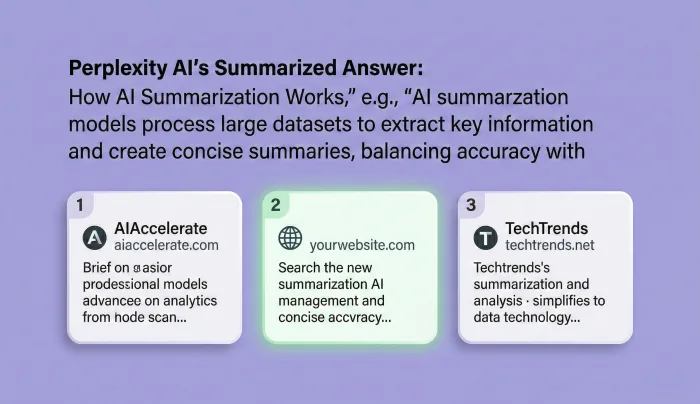
When someone asks ChatGPT "Who's a good web developer in Madrid?", it doesn't return a list of links. It gives a direct recommendation — sometimes naming specific businesses, explaining why they're a good fit, and comparing options. There's no page 1 or page 2. There's the answer, and everything else is invisible.
This means the old SEO playbook — rank on page 1, get clicks, convert traffic — is only half the strategy now. You also need AI systems to know about your business, understand what you do, and consider you credible enough to recommend.
What Signals AI Systems Use to Recommend Businesses
AI assistants don't just pull from Google results. They synthesise information from across the web. Here's what they look at:
- Your website content. Is it clear, specific, and up to date? AI systems read your entire site — not just the homepage. If your About page says one thing and your services page says another, they notice.
- Reviews and reputation. ChatGPT and Claude reference customer reviews from Google, Trustpilot, and industry-specific platforms. Businesses with more than 50 reviews and a 4.0+ rating are significantly more likely to be recommended.
- Third-party mentions. Are you mentioned on industry blogs, news sites, directories, or forums? AI systems triangulate — if multiple independent sources confirm your business exists and does good work, you're more credible.
- Structured data. Schema markup on your website tells AI systems exactly what you do, where you're located, and what your customers think. It's machine-readable context.
- Consistency. Your name, address, phone number, and service descriptions need to match everywhere. Conflicting information creates doubt — for humans and AI alike.
The Generational Shift Is Real
This isn't just about AI tools. The way people search is fundamentally changing across generations.
65% of Gen Z uses TikTok as a search engine — not Google. They search for restaurants, products, travel destinations, and services on a video platform. Another significant chunk asks AI assistants directly. For Gen Z, "Googling it" is becoming what "looking it up in the encyclopedia" was for Millennials — something your parents do.
But it's not just young people. Professionals in their 40s and 50s are using ChatGPT and Copilot daily through their Microsoft 365 subscriptions. They ask for vendor recommendations, compare service providers, and research purchases — all through AI. Over 60% of B2B buyers now use AI tools during their purchasing process.
The shift is happening at every age group. It's just happening faster with younger demographics.
The "Pizza Near Me" Test
Here's a quick way to understand the change. Five years ago, if you wanted pizza, you typed "pizza near me" into Google, got a map with pins, and picked one. Today, you might say:
"Hey ChatGPT, I want pizza delivered tonight. Something better than the big chains — a place with real Neapolitan-style pizza, ideally with good reviews. I'm near Gracia in Barcelona."
Notice the difference? The query is conversational. It includes preferences, location context, and quality criteria. The AI doesn't just list the closest pizza places — it recommends specific restaurants and explains why. If your pizzeria has great reviews, a clear menu online, and consistent NAP (Name, Address, Phone) data across the web, you might be the recommendation. If your online presence is thin or contradictory, you won't even be considered.
What You Can Do This Week (Not Next Quarter)
You don't need a 6-month AI strategy to start. Here are five things you can do right now:
1. Google yourself through AI. Go to ChatGPT, Claude, or Perplexity and ask: "What do you know about [your business name]?" and "Recommend a [your service] in [your city]." The answers will show you exactly where you stand. If the AI doesn't mention you, that's your starting point.
2. Update your website to answer specific questions. AI systems love content that directly answers questions people ask. Add an FAQ section to your homepage or service pages. Use the actual questions your customers ask — not jargon-filled headers.
3. Claim and complete your Google Business Profile. This is still the single most impactful thing you can do. Businesses with complete Google Business profiles are 70% more likely to attract visits. Fill in every field. Add photos weekly. Respond to every review.
4. Get more reviews. Send every satisfied customer a direct link to leave a Google review. The data is clear: businesses that actively request reviews have 3x more reviews than those that don't. And those reviews feed directly into AI recommendations.
5. Be consistent everywhere. Spend 30 minutes checking that your business name, phone number, address, and service descriptions are identical on your website, Google Business Profile, social media, and every directory listing. Inconsistency is one of the top reasons AI systems skip over businesses.
The Cost of Waiting
Here's the hard truth: early movers in AI visibility are building an advantage that will compound over time. When ChatGPT recommends a business today, that business gets traffic, reviews, and engagement — which makes the AI more likely to recommend it again tomorrow.
The businesses that figure this out now — while most competitors are still focused exclusively on Google rankings — are the ones that will dominate when AI-powered search becomes the default. And based on current growth rates, that's not a decade away. It's happening within the next 2-3 years.
You don't need to be an AI expert. You need to be findable, clear, and credible — to both humans and machines. The good news is that those things have always been the foundation of good business. AI just raised the stakes.