

68% of all online experiences start with a search engine.
That number hasn't changed much in five years. What has changed — dramatically — is what "search" means. In 2023, search meant Google. In 2026, search means Google, Bing, Perplexity, ChatGPT, Claude, and a dozen AI assistants. The strategies that worked three years ago are not the strategies that work today.
I've been doing this for over 20 years. I've watched strategies go from essential to irrelevant multiple times. Keyword density. Exact-match domains. Link farms. Guest post networks. Each one was "the secret" until Google made it worthless. Here's what actually delivers ROI right now — and what you should stop doing immediately.
What Doesn't Work Anymore (Stop Doing These)
Before we talk about what works, let's bury what doesn't:
- Keyword stuffing: Repeating your target keyword 47 times on a page doesn't help. It hasn't helped since 2015. Google understands synonyms and intent. Write naturally.
- Exact-match domains: Buying "best-plumber-london.com" gives you zero ranking advantage. Google devalued exact-match domains years ago.
- Mass guest posting: Paying for guest posts on random blogs with a link back to your site. Google's link spam updates have made this not just ineffective but actively dangerous.
- Thin content at scale: Publishing 500-word articles on every keyword variation. Google's Helpful Content system specifically targets this.
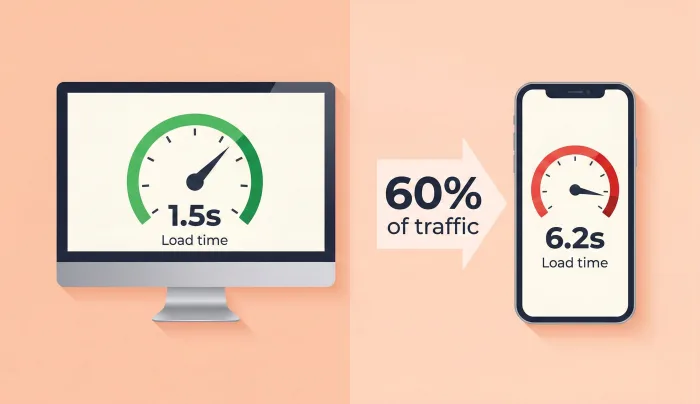
- Ignoring mobile: If your site isn't mobile-first, you're invisible. Google uses mobile-first indexing for every site now.
If an SEO consultant is recommending any of these, find a new consultant.
1. Content Clusters (Topic Authority)
This is the single most effective SEO strategy in 2026. Instead of writing isolated blog posts, you build clusters of content around core topics.
How it works:
- Choose a broad topic your business is an authority on (e.g., "WhatsApp bots for business")
- Create one pillar page — a comprehensive 3,000-5,000 word guide covering the topic broadly
- Create 5-10 cluster pages — specific subtopics ("WhatsApp bots for restaurants," "WhatsApp bot pricing," "WhatsApp bot vs email automation")
- Interlink them all: every cluster page links to the pillar, the pillar links to every cluster page
Why it works: Google evaluates topical authority. A site with 8 interlinked pages about WhatsApp bots signals deeper expertise than a site with one generic article. Sites with blog content generate 434% more indexed pages, and content clusters can increase organic traffic to the pillar page by 50-100% within 6 months.
This isn't theory. We've seen it work consistently across every industry we've worked in.
2. E-E-A-T: Experience, Expertise, Authority, Trust
Google added the extra "E" for Experience in late 2022, and it's become a dominant ranking signal. E-E-A-T isn't a direct algorithm factor — it's a framework Google's quality raters use to evaluate content. But the signals that indicate E-E-A-T absolutely influence rankings.
What Google looks for:
- Experience: Have you actually done the thing you're writing about? First-person accounts, original photos, and specific details signal real experience.
- Expertise: Do you have credentials or deep knowledge? Author bios, cited sources, and depth of coverage matter.
- Authority: Does the web recognise you as a source on this topic? Backlinks, brand mentions, and consistent publishing build authority.
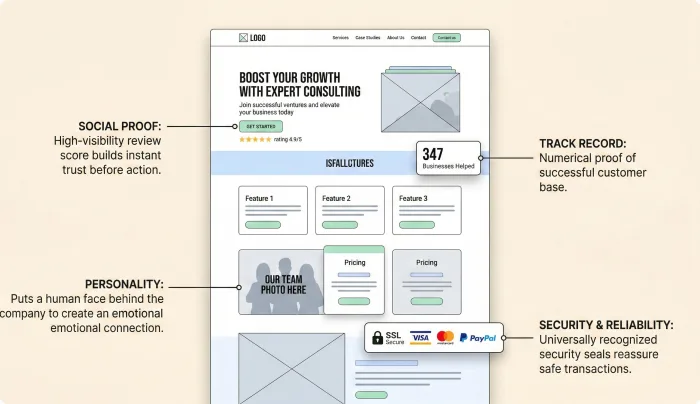
- Trust: Is your site legitimate? HTTPS, clear contact information, privacy policy, accurate content, and a clean backlink profile.
Practical steps: Add detailed author bios to every blog post. Link to your LinkedIn. Show your credentials. Include "In my experience" and specific examples from your work. Google can't verify experience directly, but the presence of specific, detailed, first-person information correlates strongly with higher rankings.
3. User Intent Matching (The Most Underrated Strategy)
Every search query has an intent behind it. Google categorises intent into four types:
- Informational: "What is programmatic SEO" — the user wants to learn
- Navigational: "Kaufast pricing" — the user wants a specific page
- Commercial: "Best WhatsApp bot providers" — the user is comparing options
- Transactional: "Buy WhatsApp bot setup" — the user is ready to purchase
The mistake most businesses make: They create transactional pages ("Hire us!") for informational queries ("How does this work?"). Google sees the intent mismatch and ranks someone else's educational content instead.
Match your content format to the intent. Informational queries need guides and explainers. Commercial queries need comparison pages and reviews. Transactional queries need clear service pages with pricing and CTAs.
Check the current top 10 results for your target keyword. If all 10 are educational blog posts, don't try to rank a sales page there. Create educational content and capture the lead with a CTA within it.
4. Technical Foundations (Core Web Vitals)
Technical SEO isn't glamorous, but it's the foundation everything else sits on. If your site is slow, broken, or hard to crawl, no amount of great content will save you.
The metrics that matter in 2026:
- Largest Contentful Paint (LCP): Under 2.5 seconds. This measures how fast your main content loads. Pages with LCP under 2.5s get a measurable ranking boost.
- Interaction to Next Paint (INP): Under 200ms. Replaced First Input Delay in 2024. Measures how responsive your site feels when users click or tap.
- Cumulative Layout Shift (CLS): Under 0.1. Pages that jump around while loading frustrate users and get penalised.
Beyond Core Web Vitals:
- Mobile-first design (not mobile-friendly — mobile-FIRST)
- Clean URL structure with logical hierarchy
- XML sitemap submitted to Google Search Console and Bing Webmaster Tools
- Structured data (schema markup) for your business type, FAQs, articles, and services
- Internal linking strategy that connects related content
Pages with over 1,000 words get 3x more traffic and 3.5x more backlinks than short-form content. But only if they're well-structured and genuinely comprehensive. Length without substance is just padding.
5. Link Building That Still Works
Backlinks remain one of Google's top 3 ranking factors. But the game has changed. Here's what works in 2026:
- Digital PR: Create original research, surveys, or data studies. Journalists and bloggers link to original data. A single data study can earn 50-200 high-quality backlinks.
- Broken link building: Find broken links on authoritative sites in your niche. Create the resource they were linking to. Email the site owner suggesting your page as a replacement. Success rate: 5-15%, but the links are high quality.
- Resource page links: Many industry sites maintain resource pages. If your content genuinely belongs there, request inclusion.
- Unlinked brand mentions: Use tools like Ahrefs to find sites that mention your brand without linking. A polite email converts these at 10-20%.
What to avoid:
- Buying links (Google's SpamBrain AI detects paid links with increasing accuracy)
- PBNs (private blog networks) — they work until they don't, and when Google catches one, every site in the network gets penalised
- Mass directory submissions to irrelevant sites
- Comment spam (obviously)
6. The AI Visibility Layer (New in 2026)
This is the strategy most businesses are ignoring — and the one with the biggest upside right now.
AI search engines (Perplexity, ChatGPT with search, Google AI Overviews) are changing how people find information. When someone asks Perplexity "What's the best CRM for small businesses?", it reads the web, synthesises an answer, and cites its sources. If your content is one of those sources, you get traffic.
How to optimise for AI visibility:
- Answer specific questions directly in your content. Use the question as an H2 heading and answer it in the first sentence below.
- Include original data and first-person experience. AI systems prioritise sources that add something the AI can't generate on its own.
- Create an llms.txt file on your domain. This tells AI systems what your business is about in a machine-readable format.
- Don't block AI crawlers. Check your robots.txt for PerplexityBot, GPTBot, ClaudeBot, and CCBot. Allow them.
- Keep content fresh. AI search engines heavily weight recency. A 2026 article beats a 2023 article on the same topic every time.
We've seen businesses appear in Perplexity citations within 4-8 weeks of publishing optimised content. The competition is still minimal because most companies haven't started thinking about this.
The 90-Day SEO Action Plan
If you're starting from scratch or resetting your strategy, here's the priority order:
Week 1-2: Technical foundation
- Run a site audit (Screaming Frog, Ahrefs, or Google Search Console)
- Fix critical issues: broken links, slow pages, missing meta tags, mobile problems
- Submit sitemap to Google Search Console and Bing Webmaster Tools
- Implement schema markup for your business type
Week 3-4: Content strategy
- Identify 3 core topic clusters for your business
- Research keywords for each cluster (pillar + 5-8 cluster pages each)
- Create a content calendar: 2 articles per week minimum
Month 2: Content creation
- Publish your first pillar page (comprehensive, 3,000+ words)
- Publish 2-3 cluster pages per week
- Add author bios and E-E-A-T signals to every page
- Interlink everything
Month 3: Amplification
- Start digital PR outreach for link building
- Optimise for AI visibility (llms.txt, unblock crawlers, answer specific questions)
- Audit and update existing content with fresh data
- Monitor rankings and double down on what's working
Ongoing: Publish consistently, update old content quarterly, build links through original research, and stay current with algorithm changes.
The Honest Truth About SEO in 2026
SEO still works. It works extremely well for businesses that do it properly. But "properly" in 2026 means something different than it did in 2023.
It means creating genuinely helpful content from people with real expertise. It means thinking about topic authority, not individual keywords. It means caring about technical performance. It means building for humans first and search engines second. And increasingly, it means being visible not just on Google, but across the entire ecosystem of search engines and AI assistants.
The businesses that understand this will own their markets. The ones still chasing yesterday's tactics will keep wondering why their traffic is declining.
No shortcuts. No hacks. Just solid strategy, consistent execution, and genuine expertise. That's what works. That's what has always worked.