

Here's a stat that should worry every local business owner: 46% of all Google searches have local intent. People searching for "dentist near me", "best Italian restaurant", "plumber open now." Nearly half of everything typed into Google is someone looking for a local business. And if yours doesn't show up, they'll find your competitor instead.
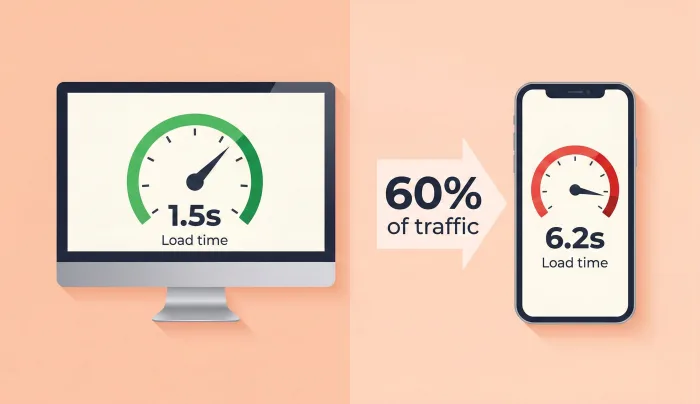
It gets more urgent. 88% of people who do a local search on their phone visit a store or call within 24 hours. And 76% of people who search for something nearby visit a business that same day. Local search isn't browsing — it's buying. These people have their wallet out. They just need to find you.
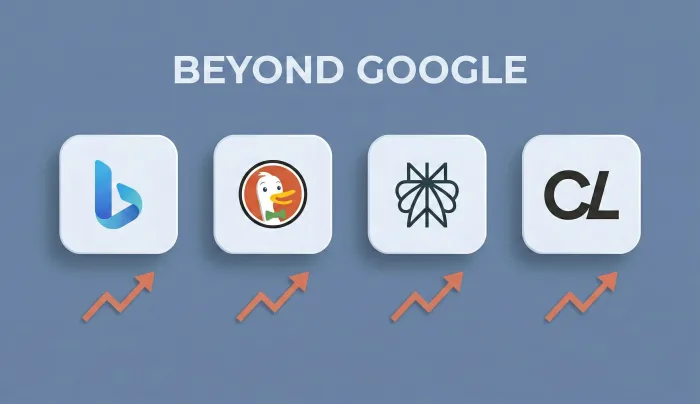
But local SEO has changed dramatically in the last two years. Google's local pack algorithm keeps evolving, Apple Maps now powers results on DuckDuckGo and Siri, and AI assistants like ChatGPT and Perplexity are starting to recommend local businesses by name. If your local SEO strategy is from 2022, you're playing the wrong game.
Your Google Business Profile Is Your Most Valuable Asset
Forget your website for a moment. For local searches, your Google Business Profile (GBP) is the first thing people see. It appears in the local pack — those three businesses with the map that show up above the organic results. And the local pack gets 42% of all clicks on the search results page.
A complete, optimised GBP isn't optional. It's the foundation of everything else. Here's what "complete" means:
- Every field filled out. Business name, address, phone, website, hours, category (primary + secondary), service area, attributes, and business description. Google has confirmed that profile completeness directly affects ranking.
- Photos — lots of them. Businesses with 100+ photos get 520% more calls than average, and 2,717% more direction requests. Upload your storefront, interior, products, team, and behind-the-scenes images. Update them monthly.
- Correct primary category. This is the single biggest ranking factor in the local pack. If you're a "Pizza Restaurant", don't set your category to "Restaurant" — be specific. You can add up to 9 secondary categories.
- Business description with keywords. You get 750 characters. Use them. Include your location, services, and differentiators. Write for humans, but include the search terms your customers actually use.
The NAP Consistency Problem
NAP stands for Name, Address, Phone number. It sounds simple, but inconsistency here is one of the biggest local SEO killers. If your Google listing says "123 Main Street" but your website says "123 Main St." and Yelp says "123 Main St, Suite 100" — Google sees three different businesses.
Every mention of your business across the internet needs to match exactly. Same name, same address format, same phone number. This includes:
- Google Business Profile
- Your website (especially the footer and contact page)
- Facebook, LinkedIn, Instagram
- Yelp, TripAdvisor, industry directories
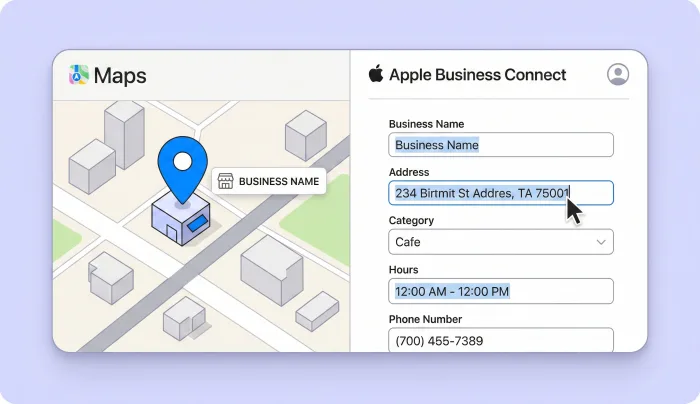
- Apple Maps / Apple Business Connect
- Chamber of Commerce listings
Do a manual audit. Search your business name and check the first 20 results. Are they all consistent? If not, fix them. This alone can move you up the local pack within weeks.
Reviews: The Trust Engine
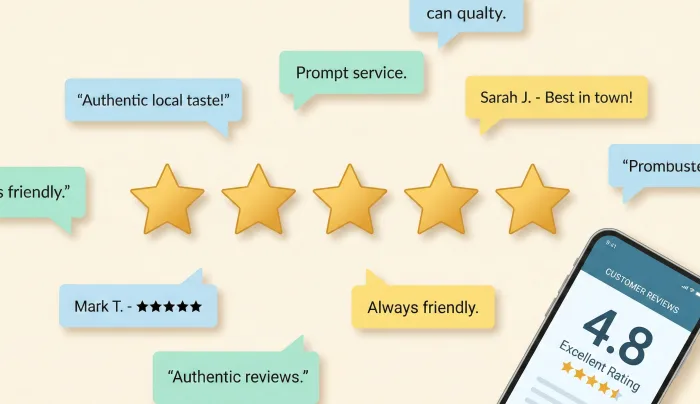
Reviews aren't just social proof — they're a direct ranking factor for local search. Google has confirmed this. Businesses with more reviews and higher ratings rank higher in the local pack.
But it's not just quantity. Recency matters. A business with 200 reviews from 2023 ranks worse than one with 50 reviews from the last 3 months. Google wants to see a steady stream of fresh reviews, because it signals that your business is actively serving customers.
Here's how to build a review engine:
1. Ask after every positive interaction. Send a WhatsApp or SMS with a direct link to your Google review page. Timing matters — ask within 2 hours of service delivery.
2. Respond to every review. Yes, every one. Thank positive reviewers by name. Address negative reviews professionally and specifically. Google tracks response rate, and it affects your ranking.
3. Never buy reviews. Google's fake review detection has improved dramatically. Purchased reviews get removed and can result in your listing being suspended.
4. Include keywords naturally in your responses. When replying to a review, mention your service and location: "Thanks for choosing us for your kitchen renovation in Eixample — we're glad the result exceeded expectations." This gives Google additional keyword context.
Local Content: Be the Authority in Your Area
Your website needs content that proves you're part of the local community, not a generic national brand. This means:
- Location pages for each area you serve. If you're a plumber serving 5 neighbourhoods, create a page for each one with unique content about that area. Not duplicate content with the city name swapped — genuinely useful local information.
- Blog posts about local topics. Cover local events, partnerships with other businesses, community involvement. A Barcelona restaurant writing about "Best Wine Bars in Born" or "What to Do After Dinner in Gràcia" signals local authority to Google.
- Embed a Google Map on your contact page. This sounds basic, but it helps Google associate your website with your physical location.
- Use local schema markup. LocalBusiness schema tells search engines your exact address, coordinates, opening hours, and service area in machine-readable format. This is critical for the local pack.
Apple Maps: The Local SEO Channel Nobody Thinks About
Here's something most businesses miss: Apple Maps powers local results on DuckDuckGo and Siri. When someone asks Siri "best coffee shop near me" or searches on DuckDuckGo, the local results come from Apple Maps — not Google Maps.
Apple Maps has over 1 billion users via iPhones, iPads, Macs, and Apple Watch. And Apple Business Connect (the Apple equivalent of Google Business Profile) is free and takes 10 minutes to set up.
Most of your competitors haven't claimed their Apple Business Connect listing. This is the easiest competitive advantage in local SEO right now.
To claim yours:
1. Go to business.apple.com
2. Sign in with an Apple ID
3. Claim or add your business
4. Verify ownership
5. Add photos, hours, categories, and your website
Done. You're now visible on Apple Maps, DuckDuckGo local results, and Siri recommendations.
The AI Local Recommendation Factor
This is the newest frontier. When someone asks ChatGPT, Perplexity, or Gemini to "recommend a good physiotherapist in Barcelona," the AI doesn't search Google. It synthesises information from across the web — your website, review platforms, directories, social media, and structured data.
What makes AI recommend your business over a competitor?
- Consistent information everywhere. AI cross-references multiple sources. If your name, services, and location are consistent across 20+ platforms, the AI treats you as a real, established business.
- Detailed, specific content on your website. Vague descriptions like "we offer quality service" give AI nothing to work with. Specific descriptions like "We specialise in sports physiotherapy for runners and cyclists, with treatments including dry needling, manual therapy, and biomechanical analysis" give AI exactly what it needs to match you to a query.
- Reviews that mention specific services. AI reads reviews. If 15 reviews mention "great knee rehabilitation," the AI will recommend you when someone asks about knee rehab in your area.
- Structured data (schema markup). AI systems parse schema more easily than natural language. LocalBusiness, Service, and Review schema help AI understand your business.
Your Local SEO Checklist
Here's the priority order. Do these in sequence:
1. Google Business Profile — claim, complete every field, add 20+ photos, set precise categories
2. NAP audit — check your top 20 citations and fix any inconsistencies
3. Apple Business Connect — claim your listing (10 minutes, most competitors haven't done it)
4. Review strategy — set up automated review requests after every service delivery
5. Local schema markup — add LocalBusiness, Organization, and Service schema to your website
6. Location-specific content — create pages for each area you serve, write local blog posts
7. Local link building — get listed in local directories, chamber of commerce, business associations
8. AI visibility audit — ask ChatGPT and Perplexity to recommend a business like yours in your area. If you don't appear, your web presence needs more specificity and consistency.
Local SEO isn't a one-time project. It's an ongoing system. Set up the foundation, then maintain it with fresh reviews, updated photos, and new local content every month.
The businesses that dominate local search aren't doing anything fancy. They've just done the basics consistently, over time, while their competitors ignored them. The bar is still low. If you start today, you can be in the local pack within 60-90 days for most industries.
Need help setting up your local SEO system? We build local visibility strategies for businesses across Europe — Google, Apple Maps, AI assistants, and beyond.